
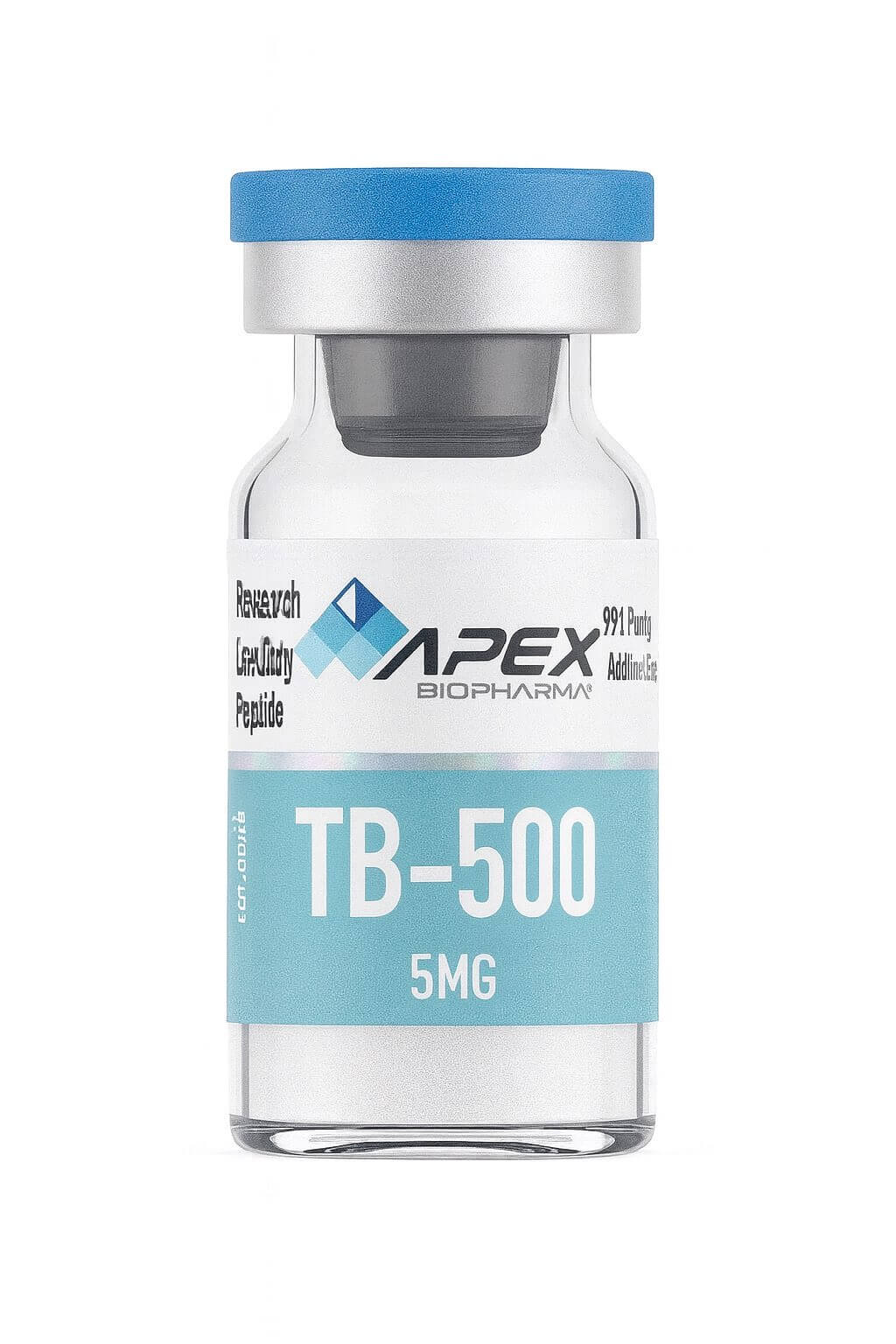
TB‑500 (synthetic thymosin β4 fragment) 5 mg — concise overview: benefits, uses, dosing, administration, safety, and practical notes.
What it is
-
Synthetic peptide modeled on thymosin β4 (Tβ4). Promotes cell migration, angiogenesis, tissue remodeling, and anti‑inflammatory effects important for repair.
Primary reported benefits / uses
-
Accelerates healing of soft‑tissue injuries: tendons, ligaments, muscles, and skin wounds.
-
Promotes angiogenesis (new capillary formation) to improve blood flow to injured tissue.
-
Reduces inflammation and scar formation; may limit fibrosis.
-
Enhances functional recovery and range of motion after injury or surgery.
-
Shows protective/regenerative effects in some cardiac and neural injury models (preclinical).
Typical administration routes
-
Subcutaneous (most common) — systemic dosing or injected near injured site for local effect.
-
Intramuscular near the injury for deeper tissue targeting.
-
Topical use is uncommon and less supported.
Typical dosing patterns (research/clinic practice; non‑prescriptive)
-
Loading/induction phase (common): 2 mg once every 2–3 days or 2 mg twice weekly for 2–6 weeks.
-
Alternative: 2–5 mg per week divided into 2 injections (e.g., 2 mg ×2/wk or 1 mg ×2–3/wk).
-
Maintenance: lower-frequency dosing (e.g., 2 mg every 1–2 weeks) as needed after the induction phase.
-
Cycle length: often 2–6 weeks, reassess and repeat if necessary. Protocols vary widely by clinician and injury severity.
-
A 5 mg vial typically provides multiple doses depending on chosen protocol and reconstitution volume.
Mechanism highlights
-
Modulates actin dynamics to enhance cell migration and wound closure.
-
Upregulates pro‑repair and angiogenic pathways, recruiting progenitor cells and improving extracellular matrix remodeling.
-
Anti‑inflammatory and anti‑fibrotic actions support better tissue architecture during healing.

Reviews
There are no reviews yet.